
Gastonia Resident Lookup Records
To look up a resident in Gastonia, choose the record that can actually answer the question. The Gaston GIS search is useful when the person is an owner or taxpayer of record. The NCSBE Voter Search tests a named registration. Recorded deeds, a public court file, a vital-record request, and an entity filing each show a different relationship. Comparing two independent sources is far more reliable than relying on one name hit.
| Record | What it can confirm | Gastonia route | Access path |
|---|---|---|---|
| Tax and GIS parcel | Owner, situs, mailing address, parcel and deed reference | Gaston County Tax/GIS | Public browser search |
| Voter registration | Registration status, address, county, precinct and districts | NCSBE Voter Search | Public, subject to protections |
| Court or estate file | Party name, case details, disposition, or heir clues | eCourts and Gaston Clerk | Portal, terminal, clerk file |
| Vital record | Life event, spouse, parent, date or place | Gaston Register or NC Vital Records | Index and copy rules differ |
| Public filing or credential | Filing role, entity address, credential status | NC SOS and NCBOLD | Interactive official search |
Begin with the fact already tied to the person. An address calls for a parcel check. A name plus birth year fits the voter form. A known death, marriage, estate, or business name points to a custodian that keeps that event. An owner is not necessarily an occupant, and a registration is not proof that someone is present on a particular day.
Verify a Gastonia Resident Match
A careful Gastonia resident lookup uses a short chain, not a broad sweep. Save the spelling, middle initial, former surname, date range, and county beside each result. Then ask whether the same person appears in records held by different offices. A property card may provide a parcel and mailing address; a voter record can provide a county and precinct; a court or deed record can supply a date and party role. Those details let a reader separate people who share a common name.
- Run the person’s name through voter search with Gaston County and a birth year when available.
- If the person owns property, compare the GIS physical address, mailing address, parcel key, and deed reference.
- Check a public court or recorded-document result for case type, party role, date, and county before treating it as the same person.
- Use the Register, Clerk, or NC Vital Records for a copy only when that custodian’s rules allow it.
- Docket
- A court’s case listing that tracks filings, dates, parties, and outcomes for a case.
- Index and image
- An index identifies a record. An image is the scanned document or record page, which can have separate access rules.
- Certified copy
- A custodian-issued copy that carries the office’s certification and may have eligibility or fee requirements.
When the goal changes from one person to every address on a road, use the Gastonia by-street directory instead of turning a name search into a street-wide list.
Gastonia Voter Lookup Fields
The state voter form is a focused name search. Its required first and last name fields can be narrowed with a middle initial, year of birth, Gaston County, and a status choice. A result can show registration details, jurisdictions, polling place, a sample ballot when available, absentee information, and voter history. It does not reveal ballot choices, and a voter entry should never be read as a household roster.
| Form field | Use in a name match |
|---|---|
| First and last name | Required starting fields for the public search. |
| Middle initial | Optional way to distinguish similarly named people. |
| Year of birth | Optional filter that can reduce same-name results. |
| County | Choose Gaston for a local result set. |
| Voter status | At least one of Registered, Removed, or Denied must be selected. |
NCSBE’s voter form is shown in the official search image below.
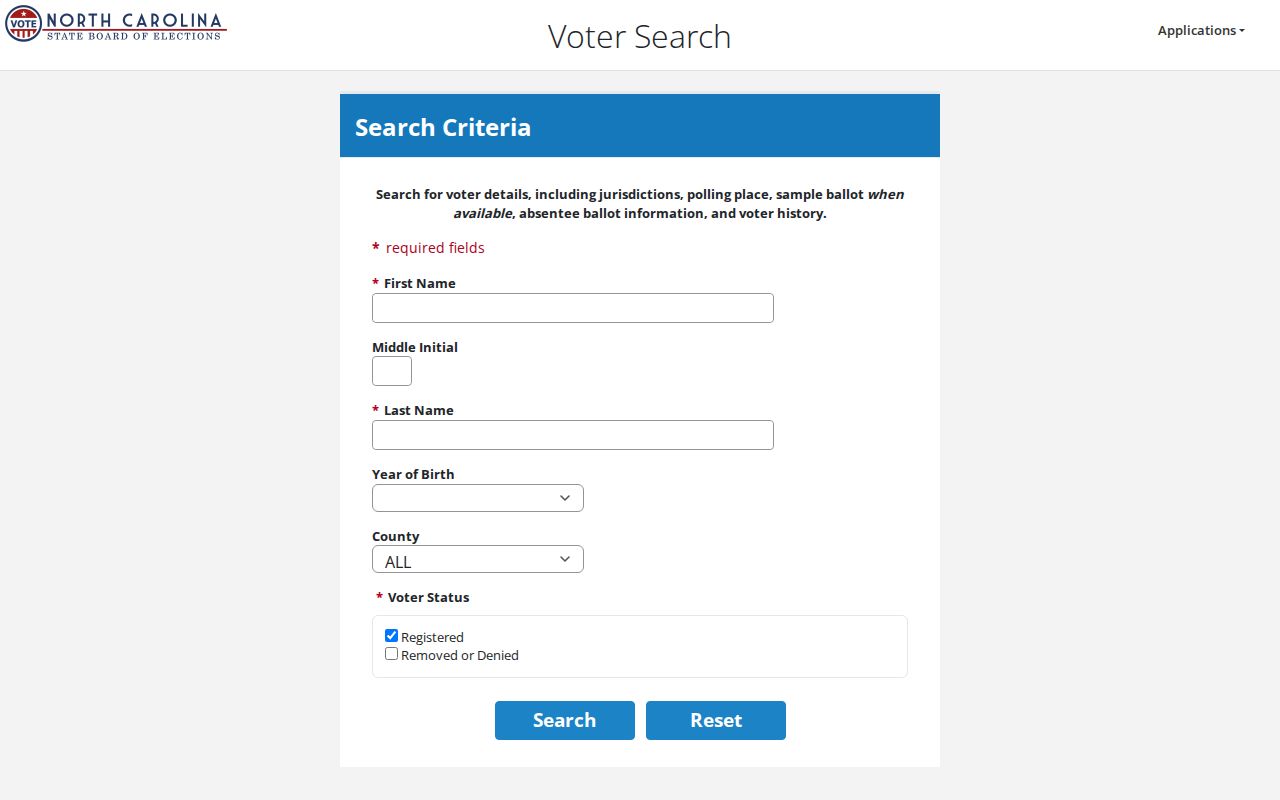
The available filters support a narrow identity check. They do not eliminate the need to compare a second official record.
Gastonia Court Record Routes
Gastonia cases use North Carolina’s unified court system, not a separate municipal docket. The eCourts Portal is the online case-information route, but the research did not capture its current field labels. If the portal does not provide what is needed, public self-service terminals at a clerk’s office can search criminal information by defendant name, case number, or victim or witness name. Civil, estate, and special-proceeding information is also available at public terminals. The actual county file remains with the Clerk.
The Judicial Branch’s court-record instructions show the official fallback: inspect a file at the Clerk in the county where the case is located, then request copies there. General public copies are described as usually twenty-five cents per page. A certified single-county criminal record check uses form AOC-CR-314 and carries a $25 fee. A result should be compared by case type, county, and disposition, because a pending, dismissed, acquitted, or convicted matter means different things.
The Gaston court-record route is illustrated here.
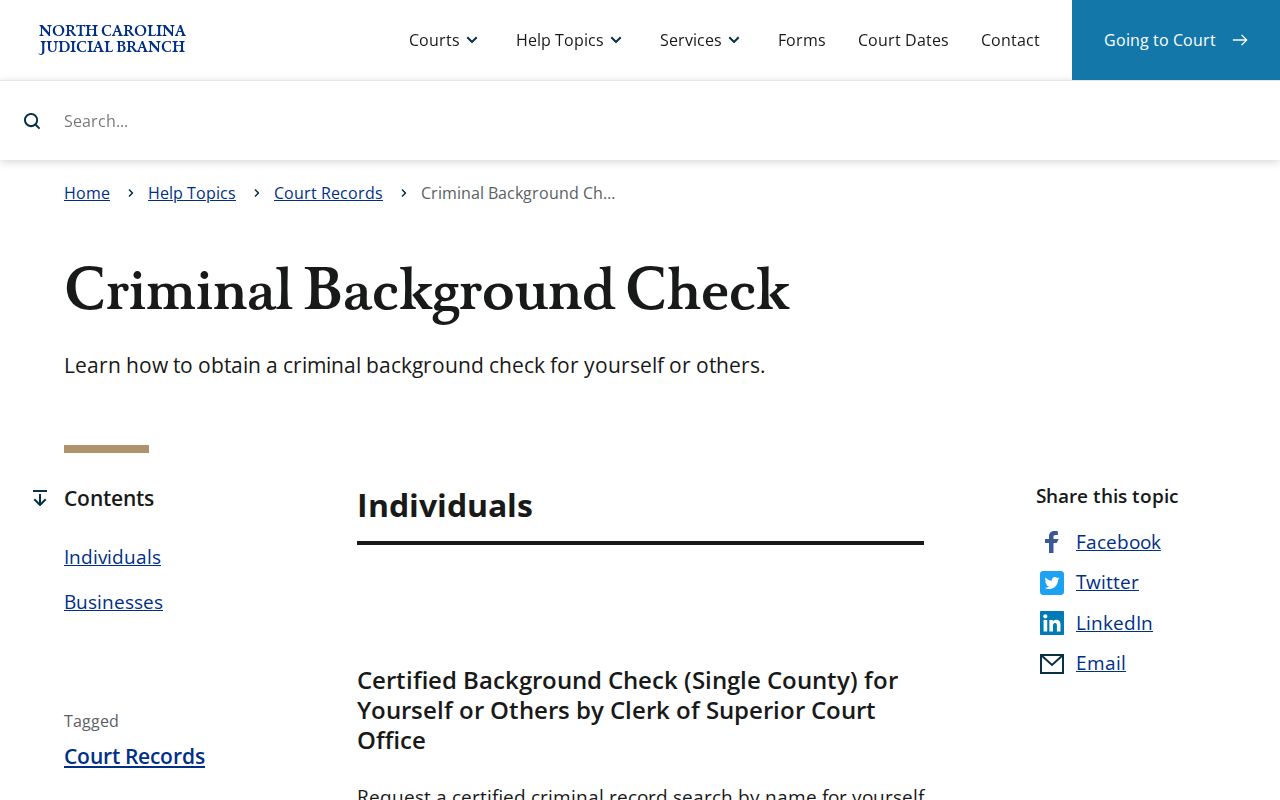
A courthouse terminal is an important local access channel when the online screen cannot answer a records question.
The Judicial Branch guide to obtaining court records distinguishes the public terminal, clerk-held file, and copy route.
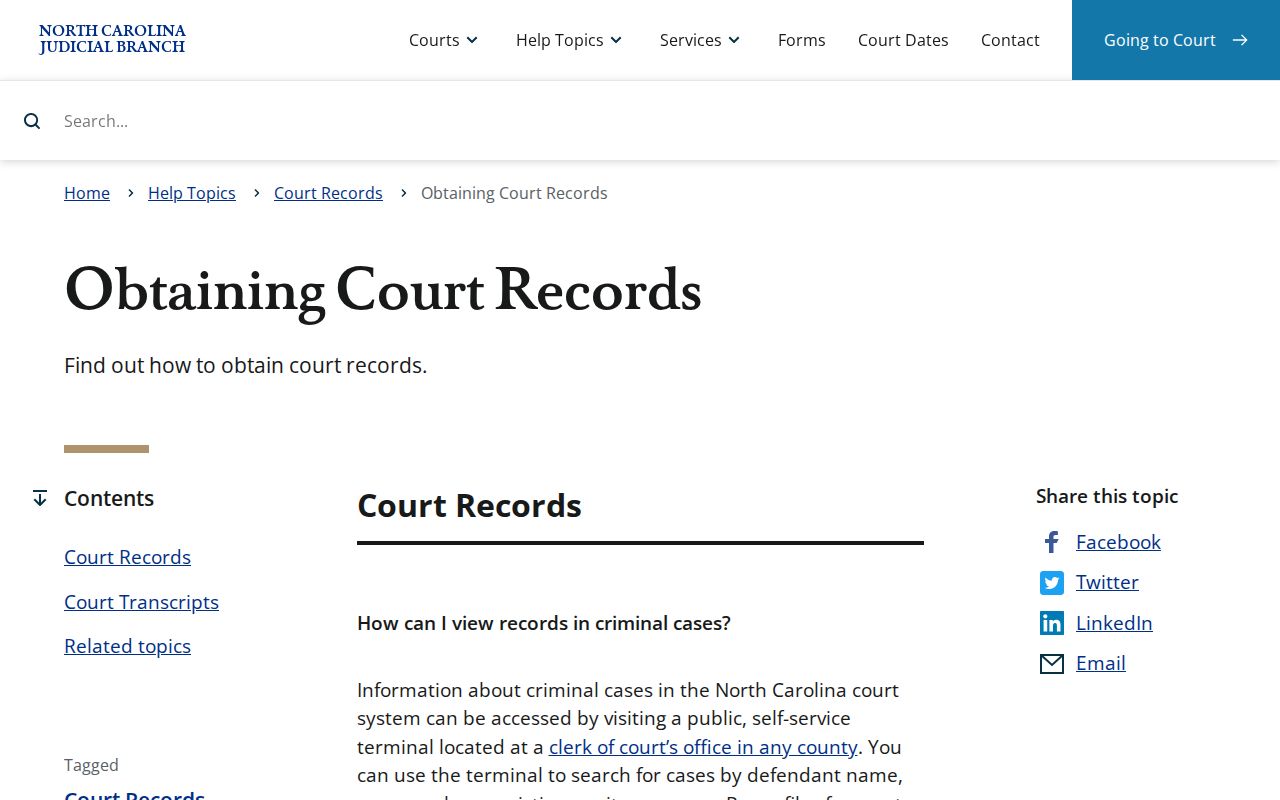
That distinction matters when a name search needs an actual file or a custodian-certified response.
Gastonia Vital Record Paths
Vital records can confirm a life event, but North Carolina does not offer a simple free certificate name search. For a Gastonia event, first identify the event county. The Gaston County Register of Deeds issues local birth, death, and marriage certificates, while the NC Office of Vital Records maintains statewide registration. Divorce judgments come from the Clerk where the divorce was granted; a divorce certificate follows the state vital route.
State coverage begins in 1913 for births, 1930 for deaths, 1962 for marriages, and 1958 for divorces. Certified copies are restricted by G.S. 130A-93(c), while county birth and death copies have separate inspection and uncertified-copy rules. The state order process takes names, event details, relationship information for a certified request, a signed application, and accepted identification. State fees captured in the research are $24 for the first search or copy and $15 for each additional certificate from the same search.
North Carolina’s certificate-order page shows why the event type and relationship matter.
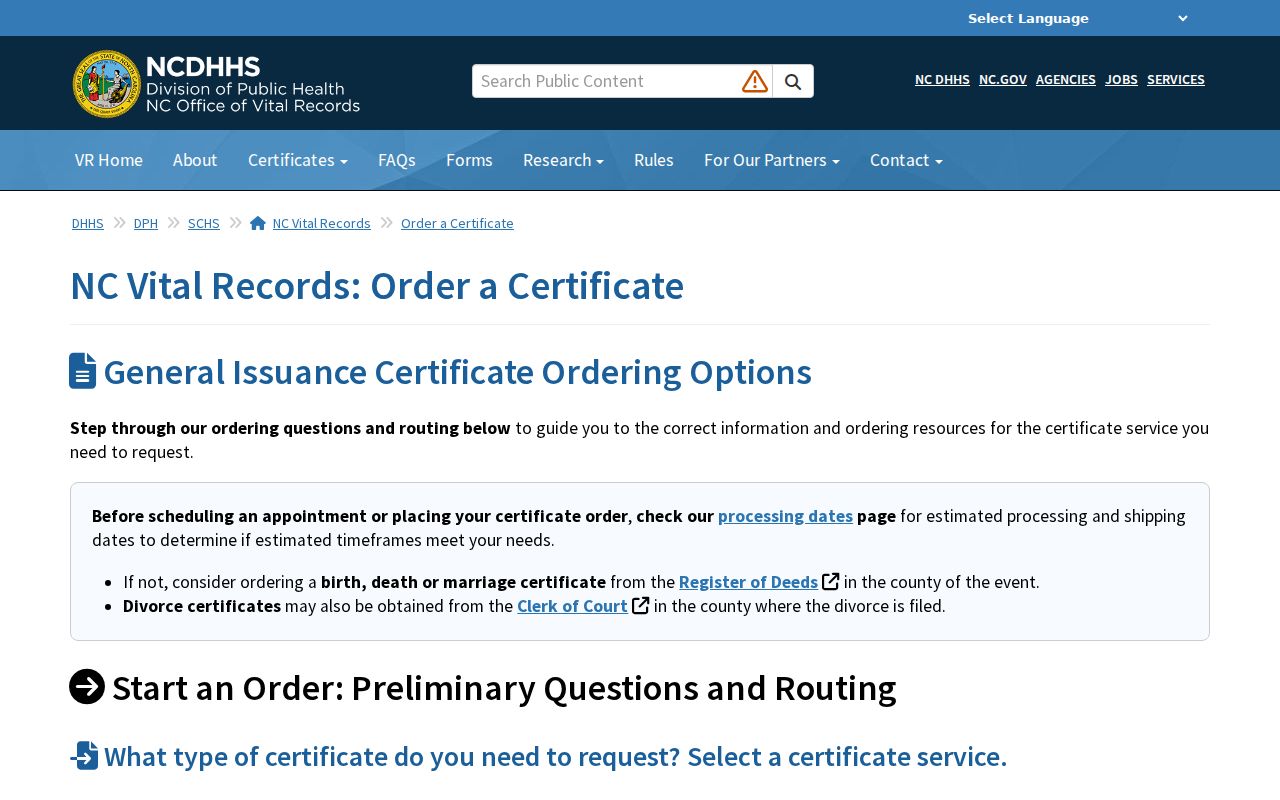
Older material may instead lead to the Register, State Archives, FamilySearch catalog, or the Gaston County Library’s local-history desk.
Gastonia Public Report Searches
Some official public-safety tools can verify a specific public event but should not be treated as a resident list. Gastonia Police reports are normally available three to five business days after an incident. The Police report landing page directs a requestor to search by case number, or by date of crime and last name. Its street route uses street number, street, and city. The Police Records Bureau can provide copies for $1, while certain sensitive report categories require direct contact.
Gastonia Police’s public report-search entry is shown below.
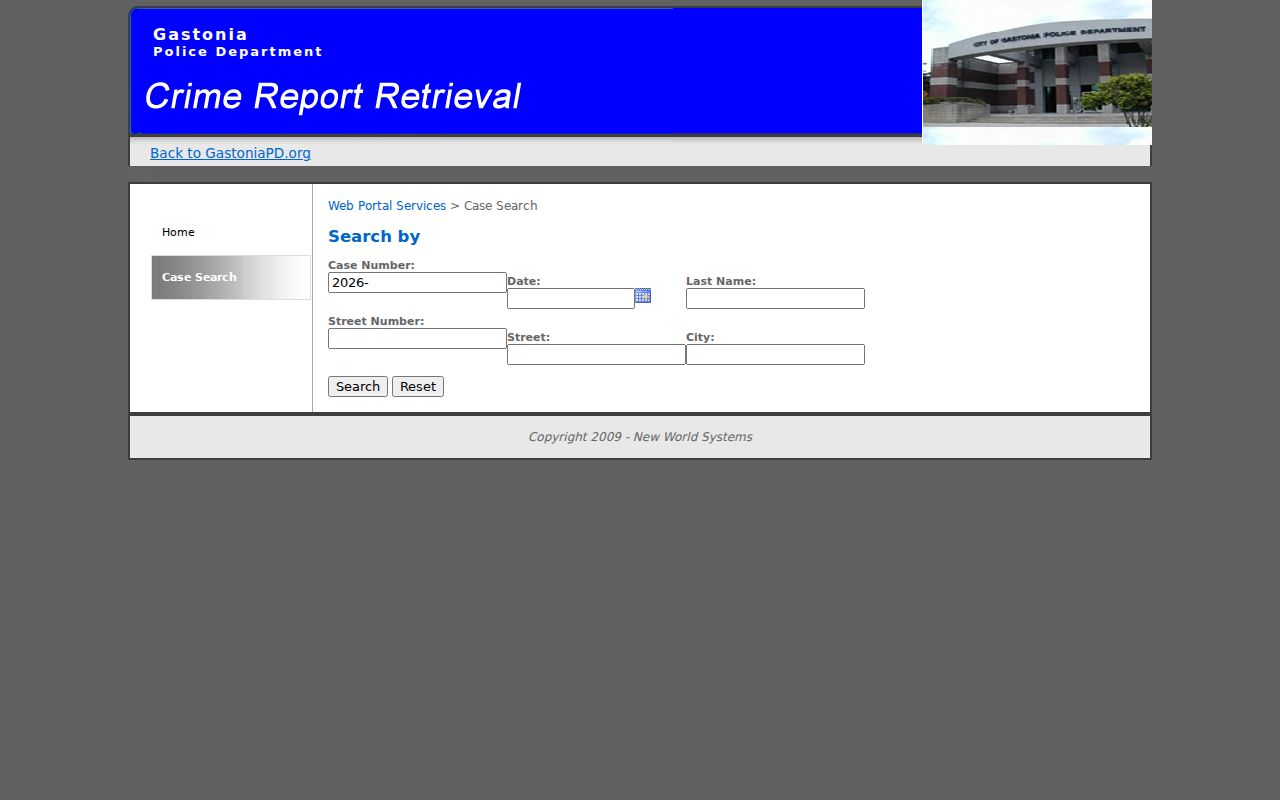
A case result describes a report or record request, not a complete incident history or proof of identity.
The North Carolina Sex Offender Registry is narrower still. It searches registered offenders by name, city, ZIP, nearby address, or registration number. Juvenile records are not published, and a registry listing cannot stand in for a general court record.
The North Carolina Sex Offender Registry provides the official state search surface shown here.
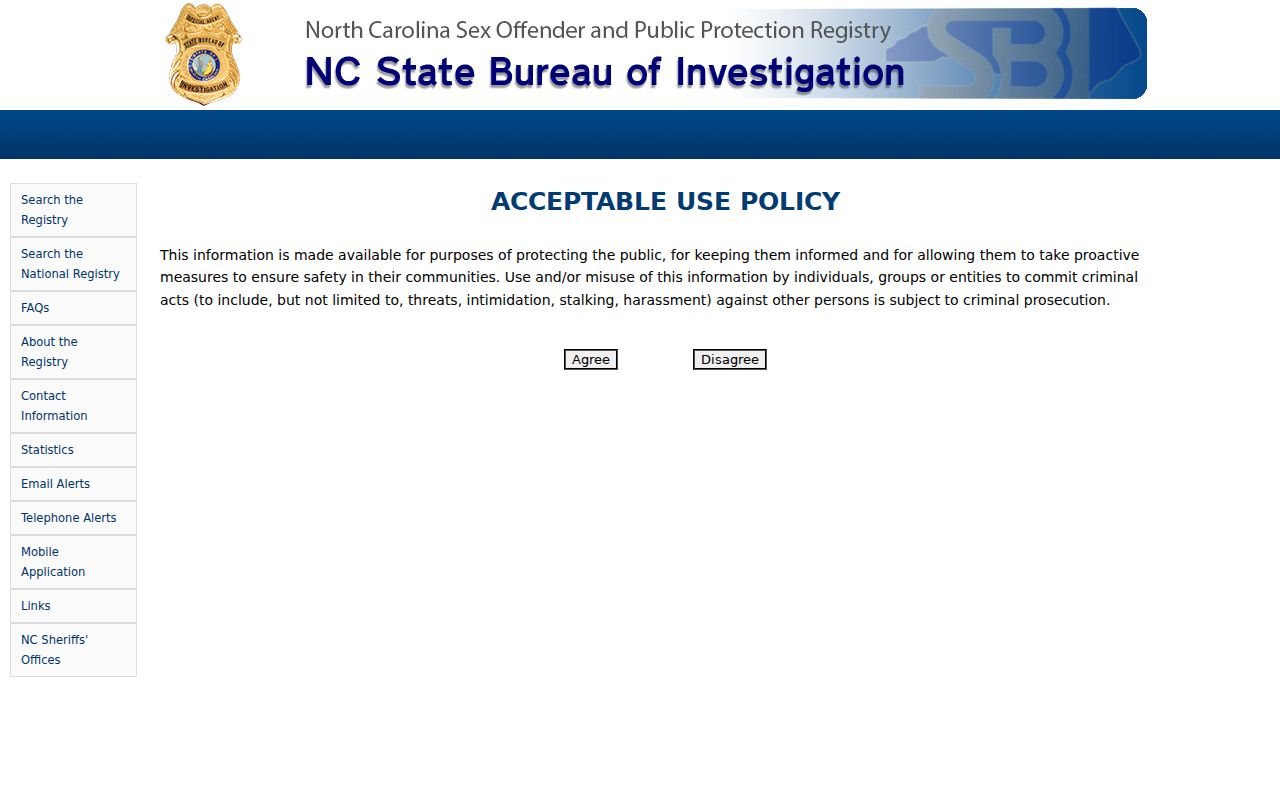
Use the Clerk and the actual case disposition for court status, not a booking, report, or registry result alone.
Gastonia Same-Name Checks
Same-name matches are common, especially when a name is carried through an old address, a public filing, and a court index. Record the source date and the exact fields that connect the result. A Gaston GIS card can show a current owner, mailing and situs addresses, parcel identifiers, deed book and page, sales data, a legal description, and property characteristics. A deed can then connect the parcel to named grantor and grantee roles. Those details are stronger bridge keys than a name alone.
A public business filing or a professional credential can add a filing role, license status, or public office address. It does not prove who is physically present at a location. The NC Secretary of State search and NCBOLD are official checks for those separate questions. A notable local tip is that Gaston Tax Mapping says staff check recorded deeds, plats, estate files, and local obituaries, making a map update a reason to check the underlying custodian record.
When Gastonia Search Trails Stop
An online miss does not mean a person was never connected to Gastonia. Older deeds may need the Register counter, a court file may need the Clerk, historical names may need the library, and a voter-file request goes through the county elections office. North Carolina’s Public Records Law, Chapter 132, generally permits inspection at reasonable times and copies as promptly as possible, but it does not require an agency to create a new list for a searcher.
Some gaps are intentional. Adoption records are sealed. Qualifying Address Confidentiality Program participants use a substitute address, and protected voters may keep their physical address confidential. Juvenile, sealed, and expunged court records are not ordinary public search results. Contact the record’s actual custodian to correct an error instead of copying an unverified result forward.
Gastonia Resident Lookup Limits
A resident lookup can establish an owner of record, a registration lead, a public filing role, or a dated historical connection. It cannot establish every occupant, reveal restricted DMV or utility data, defeat a safety program, or turn a sealed record into public information. Keep copies and notes to what the source actually states. For an old name, the Gaston County Library’s yearbooks, obituaries, city directories, and Gazette resources may provide historical context, while the custodian provides the authoritative current record.
Lawful use. Use Gastonia records for personal, lawful research and family or civic questions. Never use a public record to stalk, harass, threaten, or intimidate another person.